

Running ads for a medical spa isn’t like promoting a coffee shop or clothing store. You’re dealing with high-consideration purchases, strict compliance rules, and clients who need to trust you with their appearance. Most people don’t wake up and decide to get Botox on a whim. They research, compare, and hesitate.
The aesthetic services market has become incredibly competitive. In many metro areas, you’ll find a medical spa on every other block. That means your advertising needs to cut through noise while building genuine trust. And unlike other industries, you can’t just throw money at ads and hope for results.

The Current State of Medical Spa Marketing in 2025
Medical spa advertising has shifted dramatically over the past few years. Social media platforms like Instagram and TikTok have become primary discovery channels for aesthetic services. People want to see real results, watch procedures, and hear from actual clients before they book.
Customer acquisition costs vary widely depending on your location and services. In competitive markets, you might spend anywhere from $100 to $500 to acquire a new client through paid advertising. But here’s the thing: if that client becomes a regular who spends thousands annually on treatments, that acquisition cost looks pretty reasonable.
Paid advertising has become essential because organic reach alone won’t cut it anymore. Even if you post consistently on social media, only a small fraction of your followers will see your content. Paid ads let you reach people actively searching for treatments or who match your ideal client profile.
Key Compliance Considerations for Medical Spa Advertising
Before you launch any medical spa advertising campaign, you need to understand the compliance requirements. HIPAA regulations mean you can’t share client information without explicit written consent. That includes before and after photos, testimonials, or any identifying details.
The FDA has specific guidelines about how you can advertise medical devices and treatments. You can’t make unsubstantiated claims about results or use misleading imagery. Most advertising platforms also have their own healthcare advertising policies that restrict certain language and imagery.
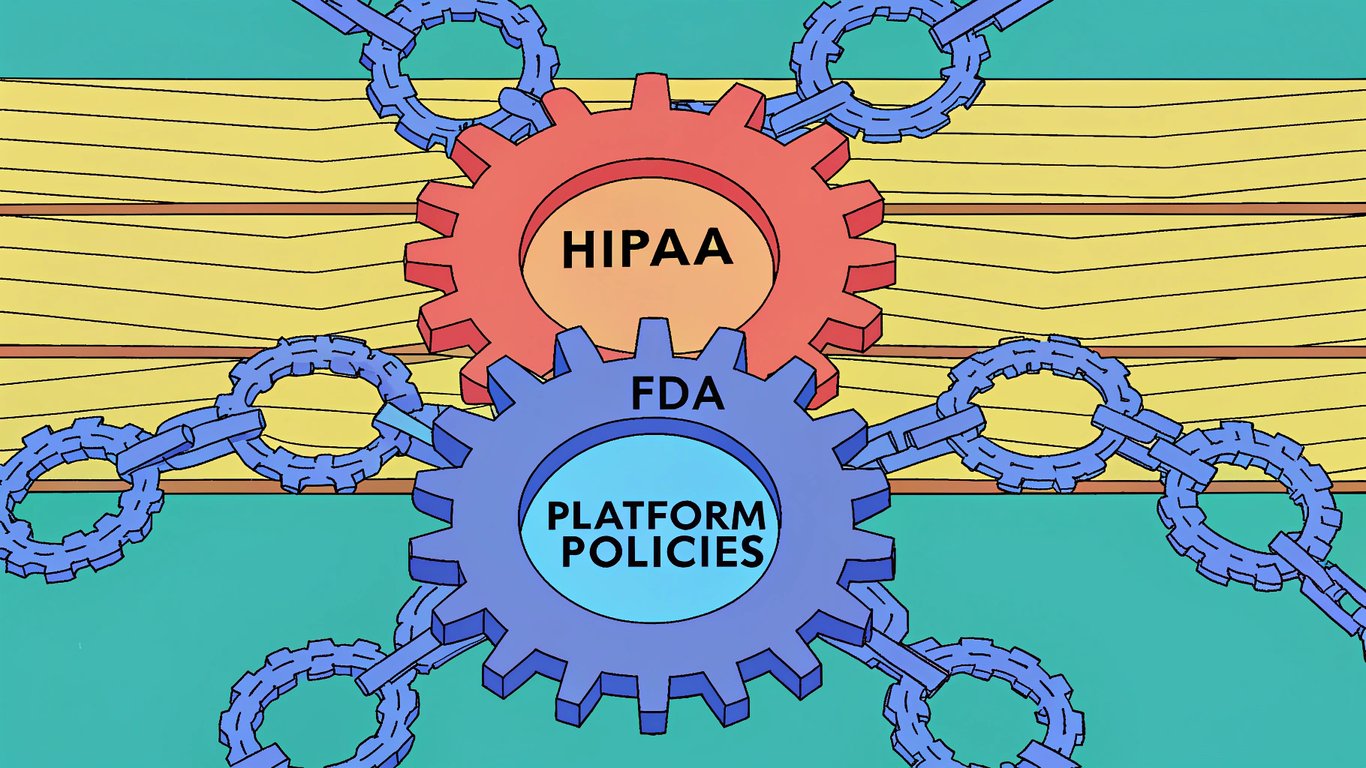
When you use before and after photos in ads, you typically need to include disclaimers stating that results may vary. Some platforms require you to get special approval for healthcare-related ads. It’s worth consulting with a healthcare marketing attorney to make sure you’re covered.
What Makes Medical Spa Advertising Different
The purchase cycle for aesthetic treatments is longer than most products or services. Someone might see your ad, visit your website, read reviews, check your Instagram, and still not book for weeks or months. They’re making a decision that involves their appearance, money, and some level of medical procedure.
Trust factors matter more in medical spa advertising than almost any other industry. People need to see your credentials, your facility, your results, and hear from other clients. Visual content performs exceptionally well because aesthetic services are inherently visual. Someone considering lip filler wants to see what your work actually looks like.
Foundation: Setting Up Your Medical Spa Advertising Infrastructure
You can’t just start running ads and hope for the best. The foundation you build determines whether your campaigns succeed or drain your budget with nothing to show for it. Ready to build a strong foundation? Book a consultation with our medical spa advertising experts.
Defining Your Medical Spa’s Unique Value Proposition
What makes your spa different from the three others within five miles? Maybe you specialize in natural-looking results. Maybe your providers have specific advanced certifications. Maybe you use the latest technology or offer a luxury experience. Whatever it is, you need to articulate it clearly.
Your unique value proposition should address why someone should choose you over competitors. It needs to be specific enough to be meaningful but broad enough to appeal to your target market. Generic statements like “we provide quality care” don’t differentiate you from anyone else.
Setting Up Conversion Tracking and Analytics
Without proper tracking, you’re flying blind. You need to know which ads drive phone calls, form submissions, and actual bookings. Start by implementing Google Analytics 4 on your website. Set up goals for key actions like consultation requests and phone number clicks.

Install the Meta Pixel on your site so you can track visitors from Facebook and Instagram ads. This also enables retargeting campaigns later. Consider using call tracking software that assigns unique phone numbers to different campaigns so you know which ads generate calls.
Connect your booking system to your analytics if possible. The real metric that matters is how many people who clicked your ad actually became paying clients. Everything else is just a step along the way.
Creating High-Converting Landing Pages
Don’t send ad traffic to your homepage. Create dedicated landing pages for specific treatments or offers. A good medical spa landing page includes clear before and after photos (with proper consent and disclaimers), information about the provider’s qualifications, what to expect during treatment, and pricing or package details.
Your call-to-action should be prominent and specific. “Book Your Free Consultation” works better than a generic “Contact Us” button. Include trust signals like certifications, years in business, number of treatments performed, and client testimonials.
Developing Irresistible Offers and Promotions
People respond to offers, but your promotion needs to make sense for your business model. Common medical spa offers include discounted first-time client packages, seasonal promotions, or bundled treatment packages. A free consultation can work well as a low-barrier entry point.
Be careful about discounting too heavily. You don’t want to attract bargain hunters who’ll never become regular clients. Sometimes a value-add works better than a discount. For example, “Free skin analysis with any facial” or “Complimentary touch-up within two weeks.”
Audience Segmentation: Identifying and Targeting Your Ideal Medical Spa Clients
Not everyone is your customer. Trying to target everyone means you’ll connect with no one. Medical spa advertising works best when you segment your audience and tailor messaging to each group’s specific concerns and desires.
Primary Audience Segment: Anti-Aging Enthusiasts (Ages 35-55)
This group typically has disposable income and is actively concerned about aging signs. They’re interested in treatments like Botox, dermal fillers, laser skin resurfacing, and skin tightening procedures. Their pain points include fine lines, wrinkles, loss of volume, and skin texture issues.
Your messaging should focus on natural-looking results, prevention, and maintaining a youthful appearance. They don’t want to look “done” but they do want to look refreshed. Emphasize expertise, safety, and subtle enhancements.
Secondary Audience Segment: Body Contouring Seekers (Ages 25-50)
This audience is interested in non-invasive fat reduction and body sculpting. They’ve probably tried diet and exercise but have stubborn areas that won’t respond. Common treatments include CoolSculpting, body contouring, and cellulite reduction.
Messaging should address specific problem areas like abdomen, thighs, or arms. Emphasize that these treatments complement a healthy lifestyle rather than replace it. Before and after photos showing realistic results work particularly well for this segment.
Tertiary Audience Segment: Skin Rejuvenation Clients (Ages 25-45)
This group seeks treatments for acne, scarring, hyperpigmentation, or general skin health. They’re interested in facials, chemical peels, microneedling, and laser treatments. Many are younger clients starting preventive care or addressing specific skin concerns.
Your messaging should focus on skin health, confidence, and addressing specific conditions. Educational content performs well with this audience because they want to understand how treatments work.
Niche Audience Segment: Men’s Aesthetic Services
The male aesthetic market has grown significantly. Men are interested in treatments but often feel uncomfortable in traditionally feminine spa environments. They typically seek Botox, hair restoration, body contouring, and skin treatments.
Messaging needs to be straightforward and results-focused. Avoid overly feminine imagery or language. Emphasize quick treatments, minimal downtime, and professional results. Many men prefer discrete service and appreciate efficiency.
Platform-Specific Audience Targeting Tactics
On Google Ads, target people searching for specific treatments in your area. Use location targeting to focus on your service radius. For display campaigns, target people who’ve visited competitor websites or shown interest in beauty and wellness topics.
On Meta platforms, use detailed demographic targeting combined with interest-based audiences. Target people interested in beauty, skincare, anti-aging, wellness, and luxury services. Lookalike audiences based on your existing clients can work well once you have enough data.
Budget Allocation: Strategic Investment Across Platforms and Campaigns
How you split your budget matters as much as how much you spend. Different platforms serve different purposes in the customer journey.
Budget Allocation Framework for Startup Medical Spas ($2,000-$5,000/month)
When you’re starting out, focus on high-intent channels. Allocate about 50% to Google Search campaigns targeting people actively looking for treatments. Put 35% toward Meta ads to build awareness and capture people in the consideration phase. Reserve 15% for testing new approaches.
At this budget level, you’re probably looking at 20-40 new consultation requests per month, depending on your market and cost per click. Focus on your most profitable treatments rather than trying to advertise everything.
Budget Allocation Framework for Established Medical Spas ($5,000-$15,000/month)
With a larger budget, you can diversify. Put 40% toward Google Search, 30% toward Meta awareness and consideration campaigns, 20% toward retargeting people who’ve visited your site, and 10% toward expansion into new channels or audiences.
This budget level should generate 60-120 consultation requests monthly. You can afford to test different creative approaches and audience segments to find what works best.
Service-Specific Budget Allocation
Not all treatments are equally profitable. Injectable treatments like Botox and fillers typically have good margins and high repeat rates. Allocate more budget toward these services. Body contouring treatments often have higher price points but longer sales cycles, so expect higher acquisition costs.
Calculate the lifetime value of clients for each service type. Someone who comes in for regular Botox every three months is worth more than a one-time laser treatment client. Your budget allocation should reflect these economics.
Platform-Specific Campaign Setup and Strategy
Each advertising platform has its own strengths and requires different approaches for medical spa advertising.
Google Ads for Medical Spas: Search Campaign Setup
Start with search campaigns targeting high-intent keywords. People searching for “Botox near me” or “CoolSculpting [your city]” are ready to book. Structure your campaigns by service type with tightly themed ad groups.
Your ad copy should include the specific treatment, your location, and a clear call-to-action. Use ad extensions to show your phone number, location, and additional links to specific service pages. Start with manual bidding until you have enough conversion data, then consider automated strategies.
Meta Ads (Facebook & Instagram): Campaign Architecture
On Meta platforms, use a full-funnel approach. Run awareness campaigns with engaging video content showing your facility and results. Create consideration campaigns targeting people who’ve engaged with your content. Set up conversion campaigns focused on booking consultations.
Instagram performs particularly well for medical spa advertising because it’s a visual platform. Use Stories and Reels to show behind-the-scenes content, treatment demonstrations, and client testimonials. The more authentic and less polished your content looks, the better it typically performs.
Retargeting Campaigns Across All Platforms
Most people won’t book on their first visit to your website. Set up retargeting campaigns to stay in front of people who’ve shown interest. Create different audiences based on behavior, like people who viewed specific treatment pages or started but didn’t complete a booking form.
Your retargeting ads should address common objections or concerns. Offer a limited-time promotion or highlight your credentials and safety protocols. Sometimes people just need that extra nudge to take action.
Ad Creative Excellence: Examples and Templates for Medical Spa Advertising
Your ad creative makes or breaks your campaigns. Even perfect targeting won’t save bad creative.
Google Search Ad Examples and Templates
For Botox services, try headlines like “Natural Botox Results | Board-Certified Providers” or “Botox Special $X Per Unit | Book Today.” Your description should mention your experience, results, and a clear next step.
For body contouring, use headlines like “CoolSculpting [City Name] | Free Consultation” or “Non-Surgical Fat Reduction | See Results in Weeks.” Include specific treatment names that people search for.
Meta Image Ad Examples: Before/After Showcases
Before and after photos perform exceptionally well but require proper disclaimers. Use a split-screen format showing the transformation. Include text overlay stating “Results may vary” and “Individual results shown.”
Your ad copy should explain the treatment, timeline, and include a call-to-action. Something like: “See the difference dermal fillers can make. This client achieved natural-looking volume restoration in just one session. Book your consultation to discuss your goals.”
Ad Copy Formulas That Convert
The problem-solution formula works well: “Tired of [problem]? [Treatment] can help you [desired result]. Book your consultation today.” For example: “Tired of stubborn belly fat? CoolSculpting can help you achieve a slimmer silhouette without surgery.”
The social proof formula: “Join [number] clients who’ve achieved [result] with [treatment]. [Credentials/experience]. Schedule your appointment.” Like: “Join over 500 clients who’ve achieved smoother, younger-looking skin with our laser treatments. 15+ years of experience. Schedule your consultation.”
Optimization and Scaling: Maximizing ROI from Your Medical Spa Advertising
Launching campaigns is just the beginning. Continuous optimization separates profitable advertising from money pits.
Key Performance Metrics for Medical Spa Advertising
Track cost per lead, but more importantly, track cost per consultation and cost per new client. A $50 lead that never books is worthless. A $200 lead that becomes a $5,000 annual client is gold.
Monitor your consultation-to-client conversion rate. If you’re getting plenty of leads but few bookings, the problem might be your sales process, not your ads. Calculate the lifetime value of clients acquired through different campaigns to understand true ROI.
A/B Testing Framework for Continuous Improvement
Test one element at a time so you know what’s actually making a difference. Start with your offer, then test different headlines, then images, then audience segments. Run tests long enough to gather statistically significant data, usually at least a week or a few hundred clicks.
Don’t make changes based on small sample sizes. Just because one ad got three conversions and another got two doesn’t mean the first one is better. Wait until you have enough data to be confident in your decisions.
Scaling Successful Campaigns
When you find a winning campaign, scale gradually. Increasing your budget by 20-30% at a time usually works better than doubling it overnight. Sudden budget increases can disrupt the algorithm’s learning and tank your performance.
As you scale, expand into similar audiences rather than just increasing bids. If a campaign targeting 35-45 year old women works well, try 45-55 year olds. If one city performs great, expand to nearby areas.
Your 90-Day Medical Spa Advertising Launch Plan
Here’s a realistic timeline for implementing medical spa advertising from scratch.
Days 1-30: Foundation and First Campaigns
Week one: Set up tracking, create landing pages, and define your offers. Week two: Build your first Google Search campaign targeting your most profitable treatment. Week three: Launch your first Meta awareness campaign. Week four: Monitor results, fix any tracking issues, and make initial optimizations.
Don’t expect amazing results immediately. The first month is about learning what works in your specific market.
Days 31-60: Expansion and Optimization
Add campaigns for additional services. Launch retargeting campaigns for website visitors. Test different ad creative variations. Analyze which audience segments perform best and allocate more budget accordingly.
By month two, you should have enough data to identify clear winners and losers. Double down on what’s working and cut what isn’t.
Days 61-90: Scaling and Advanced Strategies
Increase budget on your best-performing campaigns. Expand into new audience segments or platforms. Implement more sophisticated retargeting sequences. Start building lookalike audiences based on your best clients.
By day 90, you should have a clear picture of your customer acquisition costs, which channels work best, and what messaging resonates with your audience. That’s when you can really start scaling profitably.
Medical spa advertising isn’t rocket science, but it does require strategy, patience, and continuous optimization. Start with the basics, track everything, and scale what works. Most importantly, remember that you’re not just buying clicks. You’re building relationships with people who are trusting you with their appearance and confidence. Ready to optimize your medical spa advertising? Schedule a call with our specialists.