

Running an aesthetic clinic in 2026 isn’t what it used to be. You’ve probably noticed that the same marketing tactics that worked a few years ago don’t deliver the same results anymore. Your Instagram posts get fewer engagement, your email open rates have dropped, and somehow your competitors seem to be booking out weeks in advance while you’re struggling to fill your calendar.
The problem isn’t your services. It’s that aesthetic clinic marketing requires a completely different approach than traditional retail or service businesses.
Why Generic Marketing Fails Aesthetic Clinics
Here’s what makes marketing aesthetic services uniquely challenging. First, you’re dealing with high-consideration purchases. Nobody wakes up and impulsively books Botox the way they might buy a new shirt. Your potential patients need time to research, compare options, and build trust before they’re ready to let someone inject anything into their face.
Second, you’re navigating strict advertising regulations. You can’t make exaggerated claims or guarantee specific results. This means you need to be more strategic about how you position your services and communicate value.
Third, the competitive landscape has exploded. Medical spas and aesthetic clinics are opening at a rapid pace, and many of your potential patients are overwhelmed by choices. Standing out requires more than just offering quality treatments.
The Three Pillars of Successful Aesthetic Clinic Marketing
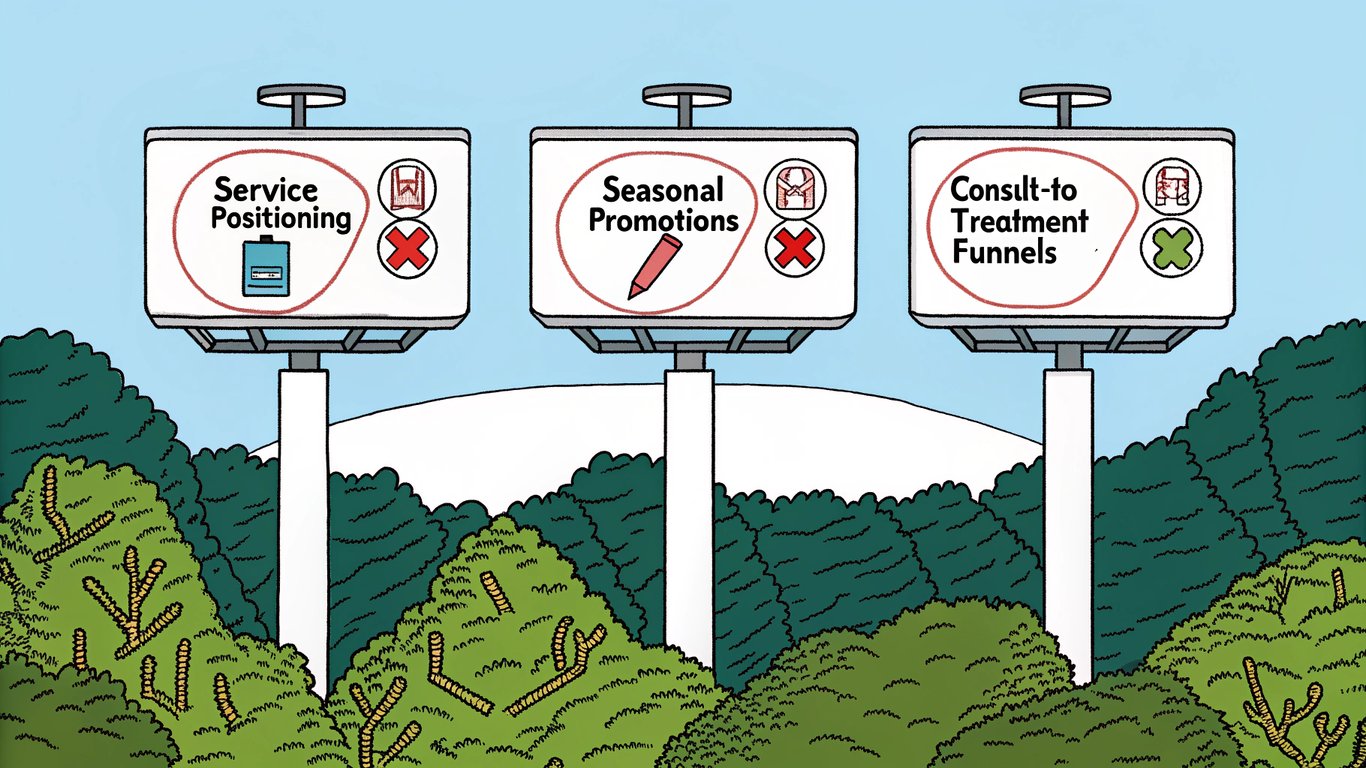
After working with numerous clinic owners, I’ve found that sustainable growth comes down to three core strategies: service positioning, seasonal promotions, and consult-to-treatment funnels.
Service positioning helps you differentiate your clinic in a crowded market. Seasonal promotions create predictable revenue throughout the year. And consult-to-treatment funnels systematically convert interested prospects into paying patients.
Let’s break down 15 practical tactics you can implement across these three pillars.
Service Positioning Tactics: Differentiating Your Aesthetic Clinic
Tip 1: Develop Treatment-Specific Value Propositions
Stop marketing your clinic as a place that does “everything.” Instead, create specific value propositions for each treatment that speak directly to patient pain points.
For example, don’t just say you offer Botox. Position it as “Preventative Botox for Professionals in Their 30s” or “Natural-Looking Results for First-Time Patients.” Each positioning speaks to a different patient segment with different concerns and desires.
Your laser treatments might be positioned around specific outcomes: “Pigmentation Correction for Sun Damage” versus “Hair Removal for Busy Parents.” The treatment might be similar, but the messaging resonates with completely different audiences.
Tip 2: Create Tiered Service Packages for Different Patient Segments
Not everyone who walks through your door is ready to commit to a comprehensive treatment plan. Some patients want to dip their toes in the water, while others are ready to invest significantly in their appearance.
Structure your offerings into three tiers. An introductory package might include a single treatment at a slightly reduced rate to lower the barrier to entry. Your premium package could bundle complementary treatments for better results. And your VIP tier might include ongoing maintenance, priority booking, and exclusive access to new treatments.
This approach gives patients options while naturally guiding them toward higher-value packages.
Tip 3: Position Your Expertise Through Before/After Storytelling
Visual evidence is powerful in aesthetic clinic marketing, but it needs to be more than just photos. Create transformation stories that include the patient’s concerns, the treatment plan you developed, and the results they achieved.
Always get proper consent and follow HIPAA guidelines when sharing patient information. Consider having patients share their own stories on video, which tends to feel more authentic than clinic-produced content.
The key is showing your expertise in understanding patient goals and creating customized treatment plans, not just showing pretty before-and-after photos.

Tip 4: Establish Niche Authority in Specific Treatments
You’ve probably heard the advice to niche down, but many clinic owners resist it because they don’t want to turn away business. Here’s the thing: becoming known for one or two signature treatments actually attracts more patients overall.
Pick treatments where you have genuine expertise or unique technology. Maybe you specialize in non-surgical rhinoplasty or you’re the go-to clinic for treating melasma. Build your content, case studies, and marketing around these specialties.
Patients will still ask about your other services, but they’ll come to you initially because you’re the expert in the thing they care most about.
Tip 5: Leverage Practitioner Credentials and Technology Investments
Your qualifications and equipment are trust signals that justify premium pricing. Don’t hide them in the “About Us” page that nobody reads.
Weave practitioner credentials into your service descriptions. Mention specific certifications, years of experience, and specialized training. If you’ve invested in advanced technology, explain what makes it different and why it matters for patient outcomes.
This isn’t bragging. It’s giving patients the information they need to feel confident choosing your clinic over competitors who might charge less but offer less expertise.
Seasonal Promotion Tactics: Capitalizing on Year-Round Opportunities
Tip 6: Build Your 2026 Aesthetic Marketing Calendar
Planning seasonal campaigns in advance prevents the scramble of last-minute promotions that don’t perform well. Map out your entire year based on natural demand cycles.
January through March is prime time for New Year transformation campaigns. April and May see increased demand for wedding season prep. June through August focuses on summer body confidence and skin protection. September and October are perfect for post-summer skin recovery. November and December drive holiday party preparation and gift certificate sales.
Create specific campaigns for each period with targeted messaging, relevant treatment bundles, and promotional offers that align with what patients are thinking about during that time of year.

Tip 7: Create ‘Event-Driven’ Treatment Promotions
People don’t just want to look good in general. They want to look good for specific events: weddings, class reunions, milestone birthdays, beach vacations, professional headshots.
Design promotions around these life events. A “Wedding Season Glow Package” might include treatments timed perfectly for optimal results on the big day. A “Reunion Ready” campaign could target people preparing for high school or college reunions.
Event-driven promotions work because they tap into existing motivation. Your patients are already planning to do something about their appearance. You’re just making it easier for them to take action.
Tip 8: Implement Strategic Flash Sales and Limited-Time Offers
Flash sales can fill your calendar during slower periods, but they need to be used strategically to avoid devaluing your services.
Limit flash sales to specific treatments or time slots. For example, offer discounted rates for appointments booked on typically slow days. Or create urgency around new treatment launches with introductory pricing for the first 20 patients.
The key is making the scarcity real. Don’t run the same “limited time” offer every month or patients will learn to wait for the next sale.
Tip 9: Develop Seasonal Treatment Bundles
Bundling complementary treatments increases your average transaction value while providing better results for patients.
A summer skin prep bundle might combine chemical peels, laser treatments, and medical-grade skincare products. A winter rejuvenation package could include hydrating facials, dermal fillers, and collagen-stimulating treatments.
Price bundles at a slight discount compared to purchasing treatments individually, but make sure you’re still maintaining healthy margins. The goal is encouraging patients to invest more while feeling like they’re getting value.
Tip 10: Launch Birthday and Anniversary VIP Programs
Personal milestones are perfect opportunities for automated marketing that feels personal.
Set up automated campaigns that send birthday offers to patients a few weeks before their special day. Include a special discount or complimentary add-on service. Track patient anniversaries (their first treatment with you) and celebrate those milestones too.
These programs work because they make patients feel valued while creating natural touchpoints for rebooking.
Consult-to-Treatment Funnel Tactics: Converting Inquiries into Loyal Patients
Tip 11: Optimize Your Consultation Booking Process
Every extra step in your booking process is a chance for potential patients to change their minds.
Implement online booking that lets patients schedule consultations 24/7 without calling during business hours. Send automated confirmation emails immediately, followed by reminder texts 48 hours and 24 hours before the appointment.
Include a brief intake form that patients can complete before arriving. This saves time during the consultation and shows you’re organized and professional.
Tip 12: Design a Pre-Consultation Nurture Sequence
The time between booking and the actual consultation is critical. Patients are excited but also nervous. Some will talk themselves out of showing up.
Create an email sequence that educates and reassures. Send information about what to expect during the consultation, practitioner bios, and relevant before-and-after examples. Include answers to common questions and concerns.
This nurture sequence reduces no-shows while warming up patients so they arrive more informed and ready to move forward.
Tip 13: Structure High-Converting Consultation Experiences
Your consultation shouldn’t feel like a sales pitch. It should feel like a collaborative planning session.
Start by understanding the patient’s goals and concerns. Use visual aids to explain treatment options and expected outcomes. Discuss pricing transparently, including any financing options available.
End every consultation with clear next steps, whether that’s booking a treatment, scheduling a follow-up consultation, or providing additional information for the patient to review.
Tip 14: Implement Post-Consultation Follow-Up Protocols
Not everyone books immediately after a consultation, and that’s okay. What matters is having a systematic follow-up process.
Send a thank-you email within 24 hours that recaps what was discussed and includes any promised information. Follow up again after a week with additional educational content or answers to questions that came up during the consultation.
If patients mentioned specific concerns or objections, address those directly in your follow-up. Maybe they were worried about downtime, so you send information about low-downtime alternatives.
Tip 15: Build Post-Treatment Retention and Referral Funnels
The patient journey doesn’t end when the treatment is complete. That’s actually when your most valuable marketing opportunities begin.
Create automated post-treatment sequences that provide aftercare instructions, check in on results, and encourage patients to share their experience. Make it easy for satisfied patients to leave reviews and refer friends.
Schedule follow-up appointments before patients leave your clinic. Send reminders about recommended maintenance treatments based on what they received.
Integrating Digital Channels for Maximum Impact
Social Media Strategies for Aesthetic Clinic Marketing
Instagram remains the dominant platform for aesthetic clinics, but your strategy needs to go beyond posting before-and-after photos.
Share educational content that positions you as an expert. Post behind-the-scenes content that humanizes your practice. Use Stories and Reels to show personality and build connection. Engage with comments and messages promptly.
TikTok is growing for aesthetic content, particularly for reaching younger demographics. Focus on educational content, myth-busting, and authentic practitioner perspectives rather than overly polished promotional content.
Email and SMS Marketing Automation
Email and SMS are your direct lines to patients without algorithm interference.
Segment your list based on treatment history, interests, and engagement level. Send targeted campaigns that feel relevant rather than generic blasts. Use SMS for time-sensitive offers and appointment reminders, but don’t overdo it.
Automation platforms can handle most of this work once you set up the sequences, freeing your team to focus on patient care.
Local SEO and Google Business Profile Optimization
When someone searches for aesthetic treatments in your area, you need to appear in those results.
Optimize your Google Business Profile with accurate information, regular posts, and responses to reviews. Create location-specific content on your website. Build citations on relevant directories.
Local SEO isn’t glamorous, but it drives patients who are actively looking for services you offer.
Paid Advertising Considerations for 2026
Paid advertising for aesthetic services comes with restrictions, but it can still be effective when done correctly.
Google Ads work well for capturing high-intent searches. Facebook and Instagram ads are better for awareness and education. Make sure you understand platform policies around healthcare advertising before launching campaigns.
Start with small budgets, test different approaches, and scale what works. Track conversions carefully so you know which campaigns actually drive bookings.
Measuring Success: KPIs and Analytics for Aesthetic Clinic Marketing
Funnel Metrics That Matter
You can’t improve what you don’t measure. Track these key metrics to understand your marketing performance.
- Consultation booking rate (what percentage of inquiries turn into scheduled consultations)
- Consultation show rate (how many scheduled consultations actually happen)
- Consultation-to-treatment conversion (what percentage of consultations result in booked treatments)
- Average treatment value (how much patients spend per visit)
- Patient lifetime value (total revenue from a patient over their entire relationship with your clinic)
These metrics tell you where your funnel is breaking down and where to focus improvement efforts.
Campaign Performance Tracking
Every marketing campaign should have clear attribution so you know what’s working.
Use unique tracking links, phone numbers, or promo codes for different campaigns. Ask new patients how they heard about you and record that information consistently. Calculate the cost per acquisition for each marketing channel.
This data helps you allocate budget to the tactics that actually drive results rather than the ones that just feel good.
Tools and Systems for Marketing Analytics
You don’t need expensive enterprise software to track your marketing performance.
Start with Google Analytics for website tracking. Use your practice management software to track patient sources and treatment history. Create simple spreadsheets or dashboards that compile key metrics in one place.
The goal is having visibility into your numbers so you can make informed decisions, not creating complicated reports that nobody looks at.
Building Your 2026 Aesthetic Clinic Marketing Action Plan
Prioritizing Tactics Based on Your Clinic’s Stage
Don’t try to implement all 15 tactics at once. That’s a recipe for overwhelm and poor execution.
If you’re a new clinic, focus on service positioning and consultation optimization first. You need to clearly communicate what makes you different and convert the inquiries you’re getting.
Growing practices should add seasonal promotions and retention funnels. You’ve got some momentum, now you need to create predictable revenue and maximize patient lifetime value.
Established clinics can layer in advanced tactics like niche authority building and sophisticated automation. You’ve got the foundation, now you’re optimizing for efficiency and scale.
Creating Your 90-Day Implementation Timeline
Pick three tactics to implement over the next 90 days. That’s it. Three things done well will deliver better results than 15 things done poorly.
Month one: Choose one service positioning tactic and refine your messaging. Month two: Launch one seasonal promotion aligned with the current time of year. Month three: Implement one funnel improvement, probably in consultation booking or follow-up.
After 90 days, evaluate what worked, adjust what didn’t, and add the next three tactics to your plan.
Consistency Over Perfection
The biggest mistake I see clinic owners make is waiting for perfect conditions before implementing new marketing tactics. They want the perfect website, the perfect photos, the perfect email sequence.
Perfect never comes.
Start with what you have. Launch that seasonal promotion even if your graphics aren’t magazine-quality. Send that follow-up email even if the copy could be better. Optimize your Google Business Profile even if your website needs work.
The clinics that win in 2026 won’t be the ones with the most polished marketing. They’ll be the ones that consistently show up, provide value, and build genuine relationships with their patients. Your aesthetic clinic marketing should reflect the same care and attention you give to your treatments, but it doesn’t need to be perfect to be effective.
Pick one tactic from this list and implement it this week. Then pick another one next month. Small, consistent improvements compound into significant competitive advantages over time. Ready to elevate your marketing? Book a call with an expert to discuss your aesthetic clinic’s growth.